Spending Habits and Consumption Recommendations
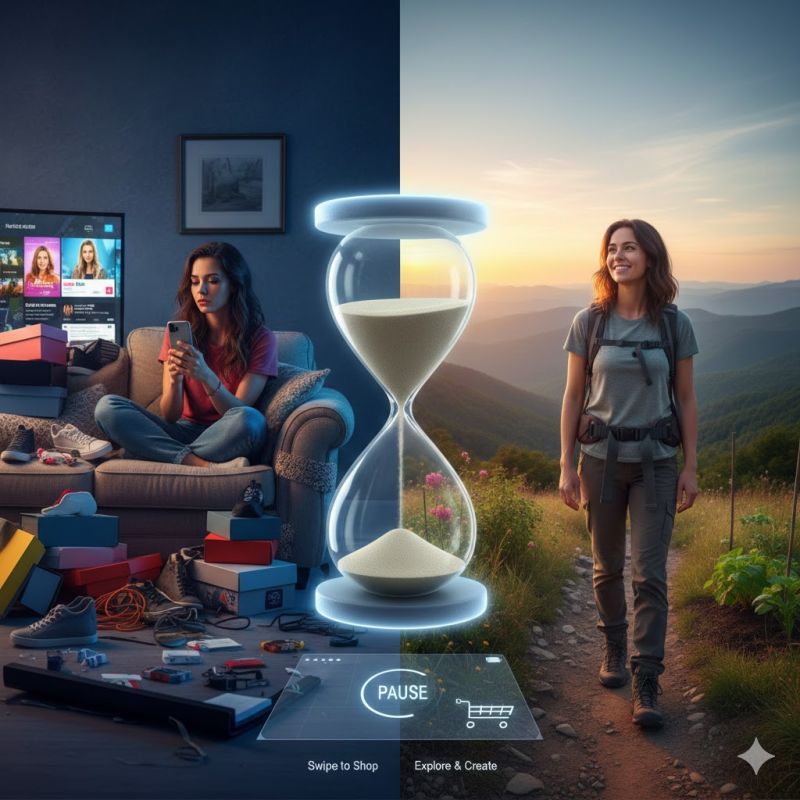
As an American, I grew up in an economy that is based on consumption. Capitalism presents making money as a primary social value. Corporations can only employ people and profit if consumers purchase goods and services, all of which is typically required for the government to collect taxes. Various forms of advertising, including less obvious and direct marketing tactics encourage people to spend money. Some people even borrow and go into debt to acquire things that they don't need. Social media and AI can exacerbate this situation and its drawbacks, which generally involve environmental degradation, can include debt, and can have negative psychological impacts. These technologies are designed to consume your time and attention; limiting AI, digital media, and social media use can reduce your material purchases and free up resources including your time, mental energy, and money.
Originally published to:
Media and Advertising Literacy
Spend some time to develop media literacy. Advertising and marketing organizations study human psychology extensively in order to influence behavior. Beware of advertising that attempts to manipulate you, such as:
- Pressuring you to purchase quickly, such as to obtain a discount
- Creation of Fear of Missing Out (FOMO)
- The illusion of scarcity
- Fake ratings and reviews
- False, misleading, and irrelevant labels such as bestseller
- Invalid expert approvals
- Meaningless celebrity endorsements
- Product placement and other methods used to associate products with sex or other things that have separate appeal
- Artificially high anchored prices, such as Manufacturer's Suggested Retail Value (MSRP)
- Triggering negative emotions such as guilt, insecurity, envy, or fear (humans are more likely to act on negative emotions)
- Dark user experience patterns, such as preselected options, confusing or difficult cancellation or unsubscription processes, and "confirshaming" wording such as "I prefer to pay more."
- Advertisements designed to manipulate emotional states and psychological vulnerabilities revealed by your online behavior.
- Influencers presenting what appears to be personal advice to blur the relationship between friendship and sales.
Conspicuous Consumption
Though I didn't belong there culturally and moved away two years later, I moved to Silicon Valley (sometimes called Silly Valley) in the late 1990s. A guy with whom I worked there, who also didn't seem to belong, explained the ethos of the region:
Spend money you don't have to buy things you don't need to impress people you don't know.
There is a term for this: conspicuous consumption. Another relevant phrase that describes an American phenomenon is keeping up with the Joneses, which means maintaining the appearance of wealth parity with your social cohort.
One obvious example is cars, which can be fun, but are really just tools. I would advise against purchasing a car in an attempt to impress others. Someone else always has a newer (or older, if classics are your thing), nicer, and more expensive car. Jewelry is another example, although this one doesn't even have a purpose other than to impress others. Consider practical things such as maintenance, insurance, and fuel costs. Beware that most new cars lose resale, sometimes showing a tremendous loss in value immediately after purchase. Think about what else you could do with the same money, and how the people in your life might prefer those actions to what could be considered self-indulgence.
Get What You Want
I absolutely don't mean that you shouldn't get what you want. I just mean that purchases (especially significant ones) should be well-considered and not rushed. That being said, I believe in buying items of high quality, and buying them sooner rather than later. While new materials often increase a house's resale value, I would rather spend that money on myself than live on ratty carpet for years.
Anticipation
For many things, anticipation can be almost as enjoyable as acquisition. For example, some people really enjoy researching and planning vacations. The same can apply to product purchases. Rather than rushing to buy something based on a product review you saw online, I recommend conducting your own research, possibly even borrowing or renting the product before committing.
Compulsive Consumption
Partly driven by advertising, people often purchase things compulsively, for example by calling the company running a television advertisement without doing significant research. This can lead to disappointing purchases. Many small purchases can be avoided completely. Some amount of research, even as simple as checking reviews that you can trust, can optimize the outcome for any significant acquisition.
Purchasing habits can also be compulsive, such as buying a drink every time you pass a specific coffee shop.
Buyer's Remorse
Beware of buyer's remorse. This occurs when you are not satisfied after purchasing something. Maybe extended and intense anticipation could make this worse, but it seems like an important reason to delay purchases long enough to research.
Subscription Models
Over time, more and more products and services move towards subscription models. Media streaming services are good examples, though software, cloud and AI services, and even some new cars try to get buyers to pay monthly fees. Other examples of subscriptions are Amazon Prime and warehouse club memberships.
Try to avoid signing up for most subscriptions in the first place. So much is available for free and much of what costs money isn't worth the difference. Periodically review recurring charges, for example by checking your credit card statements monthly.
Insurance
Insurance can be a good bet, but can also be worthless, especially for things that are less expensive. Travel insurance can be a lifesaver. I advise against foregoing necessary insurance or trying to self-insure or self-bond for significant liabilities, such as auto insurance.
Credit and Loans
Make an effort to live below your means, meaning that you spend less than you earn. Especially considering interest and penalties, credit cards, Buy-Now-Pay-Later (BNPL), and other forms of borrowing such as payday loans can be dangerous.
Try to see credit cards as convenience cards for accessing funds that you have as opposed to what you can borrow. If you can, use budgeting tools and a system such as the 50/30/20 rule, the envelope system, or zero-based budgeting. Review your transactions periodically. Identify what amount of your income is disposable rather than for necessities.
Reduce Consumption
Consumption of almost anything is bad for the environment. First there are raw materials required to produce anything or to provide any service, where products often involve packaging. Almost any process requires energy. Even making green energy products such as solar panels has some negative impact on the environment. Most products and services require additional resources for transportation, commonly oil.
Really think about whether you need something before making any purchase.
Maximize Value
When you buy quality things, they tend to last longer, which reduces the need to replace them. For example, get a good cellphone, defend it with a case and a screen protector, and try to keep and fix it for as long as possible, such as by replacing the battery when needed. In many cases, a new phone may have drawbacks relative to an old phone, and its acquisition can result in buyer's remorse as well as migration frustrations. Support vendors that create durable products and believe in your right to repair their products using relatively generic parts as opposed to planned obsolescence or requiring the use of specific facilities and proprietary tools or processes.
Research and Negotiate
Many things are negotiable, including insurance and Internet service. Even similar options from a single provider can vary by price. For example, prepaid cellphone service can be less expensive than postpaid service. These small things can add up.
Experience vs. Products
While products and services certainly improve life, consider budgeting for experiences as well. Travel, education, sports, gym memberships, hobbies, and other activities can provide lasting skills, memories, health improvement, social interaction, and enjoyment that may outlive and have more value than many material objects. These endeavors can increase bonds between people and often provide more satisfying results than the acquisition of inanimate or electronic objects and relatively solitary and silent media consumption.
See Also
- https://deliverystack.net/2025/11/27/you-are-being-programmed-curate-your-feed-and-control-your-ai-use/
- https://deliverystack.net/2025/11/23/my-financial-advice/
TODOs
//TODO: The dangers of seeking instant gratification //TODO: Negotiate things like Comcast
Comments
Any comments go here: