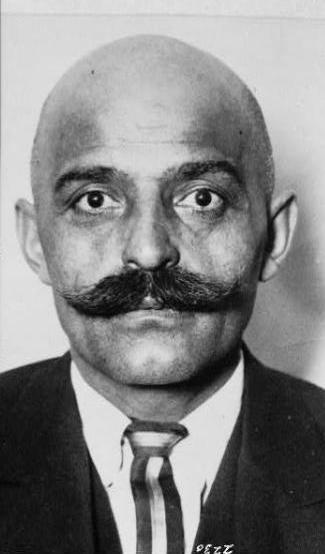
Gurdjieff: Most People Have No Soul
Instigated by listening to a video titled Gurdjieff: The Man Who Claimed Most Humans Are Not Truly Alive, this article consolidates information from that video, my childhood, and the writer P.D. Ouspensky, much of which may come from the mystic traveler George Ivanovich Gurdjieff, with additional processing by these other minds. I intend to write this without doing further research at this time.
Originally published to:
Lately, I have been working to curate my feeds so that the algorithms surface more content of value to me.
YouTube specifically seems to have determined some of my interests, and may now actually know me better than any person that comes to mind. I guess my expressed interests led it to recommend this piece on Gurdjieff. To me, this seems almost uncanny, as I was raised in a sort of hippie cult influenced somehow by his thinking. In fact, my father recommended and eventually gave me the book In Search of the Miraculous that relates the author's encounters with Gurdjieff, whom he refers to as G. I don't currently have a copy of this book with me. I found much of it quite interesting, although I couldn't necessarily follow and didn't inherently believe some of Gurdjieff's conjectures about math, planetary systems, and things like the laws of three and seven.
- YouTube: Gurdjieff: The Man Who Claimed Most Humans Are Not Truly Alive
- https://www.ggurdjieff.org/
- https://en.wikipedia.org/wiki/George_Gurdjieff
- goodreads: In Search of the Miraculous: Fragments of an Unknown Teaching by P.D. Ouspensky
One piece from the book that I strongly remember was the concept of attempting to retain self-awareness and the difficulty of this task. Regarding the thumbnail of the video, which contains the phrase "Most People Have No Soul", part of me wants to react and say that all people must have souls, even if they are not aware of it. At the same time, some people seem very disconnected from any soul that they may have, and almost robotic. I once had a therapist that described my ex-wife as "mechanistic." To me it seems that such people actually want to prevent others from exploring their own consciousness: they object to our desire to spend time alone to contemplate, our silence, and our interest in discussing philosophy. They always seem to need to talk to someone else, like they might actually lack the inner monologue that I generally cannot quiet in myself.
Recently, I seem to have discovered that a large percentage of the human population seems to prefer authoritarian rule over the responsibility of individual choice. While I choose to believe in free will, many seem to see life as deterministic based on factors beyond their control.
I happen to have written two pieces about souls relatively recently:
- https://deliverystack.net/2025/11/17/the-spectrum-of-souls/
- https://deliverystack.net/2025/11/29/can-artificial-intelligence-have-a-soul/
All of this preamble is the context in which I start the following exploration of the video transcript. I know that I've pasted quite a bit from the transcript; I couldn't have rewritten it to be much better or condensed it much. Even with so much copied, I still recommend at least listening to the video once and reading Ouspensky's book.
have you ever had the feeling that many around you are not really there?
- Many people seem to lack an inner spark or essence, the light in their eyes, seeming empty somehow, as if they have no soul and take no initiative, like shallow NPCs (Non-Playable Characters) in a video game.
- They appear to stumble through life as automatons, not fully present, unaware, not self-directed, and often materialistic, simply repeating patterns and pursuing goals established by others.
- This outcome is to the advantage of the system that surrounds us, which controls such people for the benefit of itself and certain individuals.
- This simplicity may seem normal and even desirable; some people may prefer not to think for themselves or contemplate complex, esoteric, and non-material topics.
- They may act mainly on habit, possibly learned from societal expectations.
- They may behave this way in fear of rejection by others.
Today, this invisible jail is reinforced by powerful external forces. The media, social networks, education, and power structures all work to shape our attention, emotions, and perception of reality. Every stimulus is designed to keep us docile, distracted, [music] and compliant. However, as Gurdjieff taught, the most determining jailer is not external. We ourselves build the walls, close the doors, and place the keys out of our own reach. The modern human being lives captive to their own habits, automatic emotions, and pre-programmed reactions...We think we are free, but our freedom is an illusion carefully sustained by routine, education, society, and the expectations imposed on us.
- To reconnect with our individual innate essences, we need to break the programming we have received from external forces.
- To be empowered, we need to believe in free will and responsibility for the outcome of our decisions.
- The first step, which may be a shock, is to recognize the situation and our own mechanicality.
- Gurdjieff:
...described most human beings as soulless machines, convinced they were living their own lives while in reality they were being directed by invisible forces...taught that modern man is a fragmented machine, a cluster of unconscious I's that coexist without order or control. For him, the soul is not received at birth. It must be [music] conquered, cultivated, and developed. He showed us that the world constantly drains our attention and energy. Routine, society, habits, and even our emotions pull us away from ourselves. Only through conscious and systematic work, often mysterious and difficult to understand, can we recover our autonomy, transcend illusion, and become complete human beings.
- Gurdjieff directed people into unusual efforts such irrational and symbolic dance movements, believing in provoking "controlled shocks" to "to shake the mind and body, activate dormant levels of energy, open perception, and awaken from mechanical sleep."
- Gurdjieff developed what is termed the "fourth way" to awaken the body, mind, and emotion in daily life without fleeing society and the material world.
- From what I remember of the book, Gurdjieff was somewhat secretive, often disappearing, and never promoting himself.
- This is the hard part - I interpret this as the effort to remain truly present and aware:
Observing yourself, noticing every thought, every automatic reaction, every impulse that arises without your choosing it. Only when you recognize that you are trapped can you begin to break the script, challenge the routine and regain control of your life. The creation of the soul. This is one of the most controversial themes in Gurdjieff's teachings. One he stated without his voice trembling: Most human beings do not have a developed individual soul. They are not born with it fully formed. They are born [with] potential as biological machines.
And if they do not wake up, they die as they were born, unconscious, fragmented, lost...They need rules, external structures, group identities to sustain themselves. They do not have a true inner I to guide them. So they depend on the system to know who they are. That is why they take refuge in ideologies, in flags, in trends. That is why they speak like antennas repeating a signal that does not belong to them. Their inner emptiness not only makes them predictable but also manipulable. And here something even more unsettling appears. When a human being has not awakened, they are available for the system to think and decide for them. Like in the matrix when Morpheus explains, "Until it has awakened, any person still plugged in can become an agent of the system."
And if you dare to mention awakening consciousness, the deeper meaning of existence, something in them reacts with rejection, with mockery, with fear. They defend the system that keeps them asleep because without it there is nothing to hold them up. They have built their life on an illusion and if it collapses they will collapse too. Gurdjieff explained it like this. The soul is something that must be created. It must be born within the human being. It is not a gift. It is a conquest. If we do not build it or fight for it, we are left at the mercy of our lower instincts, dominated by automatic impulses and trapped in desires and aversions. Inertia and collective programming drag us along without us noticing. We return to Earth without having awakened. We return to dust without having remembered who we were.
And here arises one of Gurdjieff's most radical principles. Immortality is not granted to us. It is only attained by creating our own soul. Otherwise, it scatters. It dissolves. It is lost. Without an inner center of gravity, we are food for the forces of mechanicality. Cogs in a machinery we do not see. Secondary characters in someone else's play. But the one who awakens, the one who fights to not fall back asleep begins to form something different, something that does not belong to time, something that does not unravel with death. That something is what Gurdjieff called the real soul, the conscious soul, the soul that remembers.
- Gurdjieff espoused what he called self-remembering to breach our internal spiritual prison systems.
- The solution is not faith, nor morality, nor tradition, nor meditation.
- The solution is to begin to remember yourself, to retain presence and awareness of your core inner being.
at any moment of the day while you speak, work, walk, argue, or even breathe, you can try to be present. Bring your awareness to the moment and simply remember yourself. I am here. I exist. Gurdjieff said that man lives identified with everything except himself. his thoughts, his emotions, his story, his traumas, his desires, but very rarely with his being.
That's why he insisted, "Man does not possess an I. He has thousands of Is, each speaking in turn, and that is the secret. If there is no constant I, then there is no one there to awaken. So self-remembering is the first act of resistance, the first blow against programming, the first crack in the wall of the invisible prison. It is not about thinking of oneself. That would be just another mechanical thought. It is about feeling oneself, witnessing oneself being here and now without masks, without a script, without being an NPC repeating lines in someone else's video game.
Sometimes a single instant of lucidity is enough. A moment in which you realize you were about to react automatically and you stop. That is breaking the mechanism. That is challenging the program that is stealing energy from the system.
Gurdjieff knew maintaining that presence is not easy. The sleep always returns. But each time you recover attention, even for a second, something strengthens inside. Something grows. Something unifies. This is why self-remembering is not a technique. It is a battle, an internal revolution, a silent declaration. I am here. I am awake. I am. And the more often you remember yourself, the harder it is to fall asleep again. The harder it is to become a machine again. The harder it is for the system, the media, the elites, or the energy predators to use you like an empty shell. It is in that act, so invisible yet absolute where the true work begins. The work of becoming a real unsold human being. Inner alchemy transforming the machine into soul.
Awakening begins when we learn to distance ourselves from the inner machine to observe it like someone watching a river flow without being dragged by it. A different kind of attention is needed...The ability to witness the spectacle of personality without becoming hypnotized to separate from automatic reactions and remain as a conscious observer not identifying with patterns. Gurgev said that learning not to identify with every thought, emotion or impulse is fundamental. Observe how they arise automatically. How your mind weaves stories about who you are and how you should act. Instead of absorbing them as absolute truths, view them as reflections of your inner mechanism, like clouds passing across the sky.
For example, when feeling anger in an argument, do not define yourself by it. Breathe, observe the reaction, and recognize. This is a pattern, not my essence. Every time you achieve this distance, you create space for conscious presence. You become a witness to your experience. You do not deny the emotion. You simply observe it from another plane, and you are no longer dominated by it.
- I try to maintain equanimity and not react to emotions, especially negative emotions, instead trying to see them as signals that I need to change something, and then respond logically.
- In addition to meditation, I find self-remembering and maintaining presence to be very challenging; I have an active monkey mind.
To apply these laws, Gurdjieff proposed conscious shocks, deliberate interruptions of routine that break mechanicalness. They are not punishments or extreme efforts but friction that awakens dormant energy. For example, waking up 30 minutes earlier and doing something unexpected. Changing your route to work, deliberately facing a task or situation you would normally avoid. Each shock generates additional energy, allowing you to break through blockages, discover hidden layers of yourself, and reconnect with vital force that is normally wasted in comfort and repetition.
- I absolutely agree with this.
- One technique I use is that instead of seeking happiness, which is always fleeting, I embrace suffering, which I can always successfully locate somewhere.
- This increases my appreciation for good things, though without caution, such can also make me anxious that they will disappear.
- Basically, I make efforts, but try to accept any circumstances or potential outcomes, especially those beyond my control.
There is much more in the video.
For some reason this reminded me of some Sufi wisdom I heard from Ram Daas in the audio book Becoming Nobody:
Trust in Allah, but tie your camel.
Note: While the quote uses "Allah," Sufism is often associated with a broader understanding of "God".
Comments
You can comment on this topic here: