The Spectrum of Souls
This article discusses thoughts relating to a concept that I might most concisely refer to as the spectrum of souls. I know that this is a bit of a ramble or rant because I am just jotting down some thoughts while I would like to work on other things. Just because I write something here does not necessarily indicate that I believe that thing permanently; I like to explore thoughts with which I might not agree always and forever.
Originally published to:
The following video popped up in my YouTube feed and got me thinking enough that I felt that I had to write on this topic:
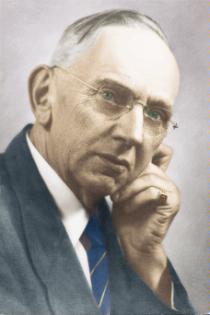
To be clear, I have never believed in clairvoyants or psychics, but Cayce made statements to which I can relate and interpret, and to which I can add my own perspectives. I had never heard of him before, but according to the video, clairvoyant healer and psychic Edgar Cayce believes that some people have no soul.
Another term for such people is philosophical zombies - they can operate, but they not elevate. Cayce suggests that one purpose of these people is to help those with souls to grow, but that can also cause others to become trapped in materialism.
In a sense, Cayce seems to describe narcissists and sociopaths. There is no precise number, but one of Cayce's suggestions is that one out of a thousand people has no soul. This may be just my interpretation, but one possible perspective is that such people exist to provide challenges for those of us who do have souls, and that people without souls may be able to develop souls.
The soulless people that Cayce decribed have no empathy or creativity and would seem to operate much like modern Artificial Intelligence (AI) systems, specifically Large Language Models (LLMs) that can be trained to mimic thought, emotion, compassion, and even the existence of a soul without actually having any of these things.
It would be impossible for me to convey all my philosophy, and every reader would interpret them differently. Not only that, but I do not actually seem to have a single, consistent, integrated philosophy. I take different perspectives at different times. I explore thoughts that I do not believe. I think that such flexibility is necessary in general for learning and understanding.
"The test of a first-rate intelligence is the ability to hold two opposed ideas in the mind at the same time, and still retain the ability to function."
--F. Scott Fitzgerald, The Crack-Up
What I really mean by philosophy is a combination of numerous mental constructs and processes. These include spirituality, religion, psychology, science, logic, philosophy, science, and now apparently clairvoyance. My special interest is in those things that almost all faiths and modes of thinking hold in common, which is what I would define as humanity. Otherwise, the particulars of individual religions seem to be incessantly misleading, unless they are intended to trigger critical thought leading individuals to clarify their own perspectives.
I am aware of the global damage that has been done in the name of organized religion and the conflicts that opposing beliefs continue to create in the world. From my perspective, such political structures do not represent the majority of the people that they contain, although many seem to have a need to cling to a center of inclusion and others apparently prefer authoritarian leadership.
Getting back to the topic of people without souls, there definitely appear to be such people, but I prefer to think that it is not possible. I could argue that people like Donald Trump, Steven Miller, and Peter Thiel do not seem to have souls. My ex-wife once asked for what I was looking one night when I was peering into her eyes. When I told her that I wanted to see her soul, she told me that she did not have one. I was shocked - absolutely could not believe that someone could think such a thing. In some sense, she almost proved it over the two decades that we were together and afterwards. My therapist in Singapore described her almost twenty years later as "mechanistic". To me, as a compassionate and trusting person, such people are incredibly dangerous.
It may be important to mention here that I believe that everyone has some soul, though some people have less or even repress theirs. As someone that focuses on the intersection and potential convergence of psychology and technology, one of my concerns is that people who work with and believe too much in the potential of technology can minimize their own humanity and reduce the value of their own souls.
I see almost every human trait as existing on a spectrum. Some people have more or less of each characteristic than others. This includes mental conditions with labels such as OCD (Obsessive-Compulsive Disorder), ADD (Attention Deficit Disorder), ADHD (Attention Deficit Hyperactivity Disorder), and even labels such as autism. In fact, I don't think that these things are always disorders, but in the right proportion and circumstances, can actually be adaptive traits that can give some advantages.
While I do not believe in any specific religion, I choose to believe that people and even animals can have souls. Whether they exist or not, I think it is valuable and maybe even important for people to believe that they have souls and free will and that they will face karmic outcomes for their thoughts, decisions and actions, whether on Earth or in an afterlife. Certainly there is some truth to the concept of karma. Without such considerations, people may resort to believing in things such as determinism or other theories that could reduce their sense of responsibility for their own actions, which could erode human ethics that have taken thousands of years to evolve and are likely beneficial to our species through curbing some of our more barbaric tendencies.
I think we may be able to measure the soul by the degree of compassion a person has. The presence or absence of a soul seems very similar to other traits: some people have more soul, or stronger souls, or older and wiser souls, than others. In extremely harsh environments, individual survival could be so important to species survival that a person with less compassion would have greater chances of survival.
In such cases, pure self-interest could benefit species survival. In more plentiful environments, cooperation and compassion could have a more positive impact on species growth and hence survival. Nature creates the greatest variation to ensure the greatest chance of species survival. There is certainly some tension between individual survival and species survival. Individual survival trumps, as an individual cannot survive without the species.
One challenge is that all human variants exist in a single shared environment. Currently, that environment is incredibly plentiful - with greater global equity, humankind could produce more than enough for everyone. As a result, people with compassion can see those without as evil, whereas in harsher environments such traits could be respected and appreciated more.
Many religions speculate that individual souls are eternal. As there are constantly more people on the planet, and as the planet is much older than our species, I am not sure how this could be the case, as it would seem to be necessary for new souls to enter the system as the population increases. If the soul exists on a spectrum, then maybe a finite amount of soul is divided by this increasing population. I believe that consciousness, which may also be related to the soul, is a finite property of the universe, constantly moving and transforming in ways similar to other forms of energy. It's quite possible that things other than living beings have consciousness, and not all of those things are on this planet.
One thing that Cayce apparently suggested is that people without souls are drawn towards positions of power. I can see some of this in people like Trump and Theil but I am not sure that I see it in all people that seem to have less compassion than others.
From my perspective, the less soul, consciousness, and compassion that one has, the more evil they appear to be. Could I have greater material wealth if I had less compassion? Probably. Would I ever make that trade? Certainly not.
I could go on and on, but I feel like I've spent too much time on this already today. I recommend watching the video and commenting on this article.
Update 10.Dec.2025: Apparently, this type of thinking goes back a ways. I don't care to spend the time to process this currently, but if this topic interests you, the following video adds to it and references additional people and topics.